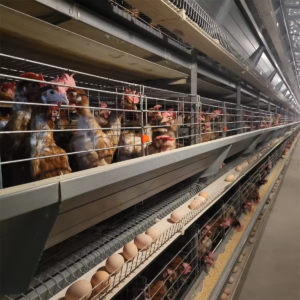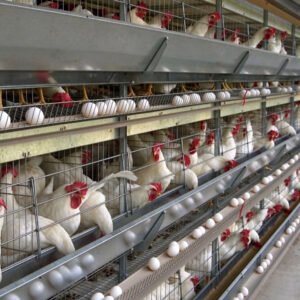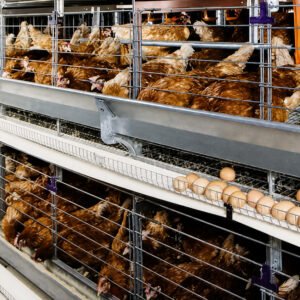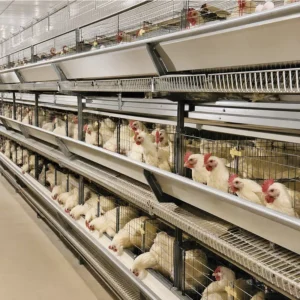

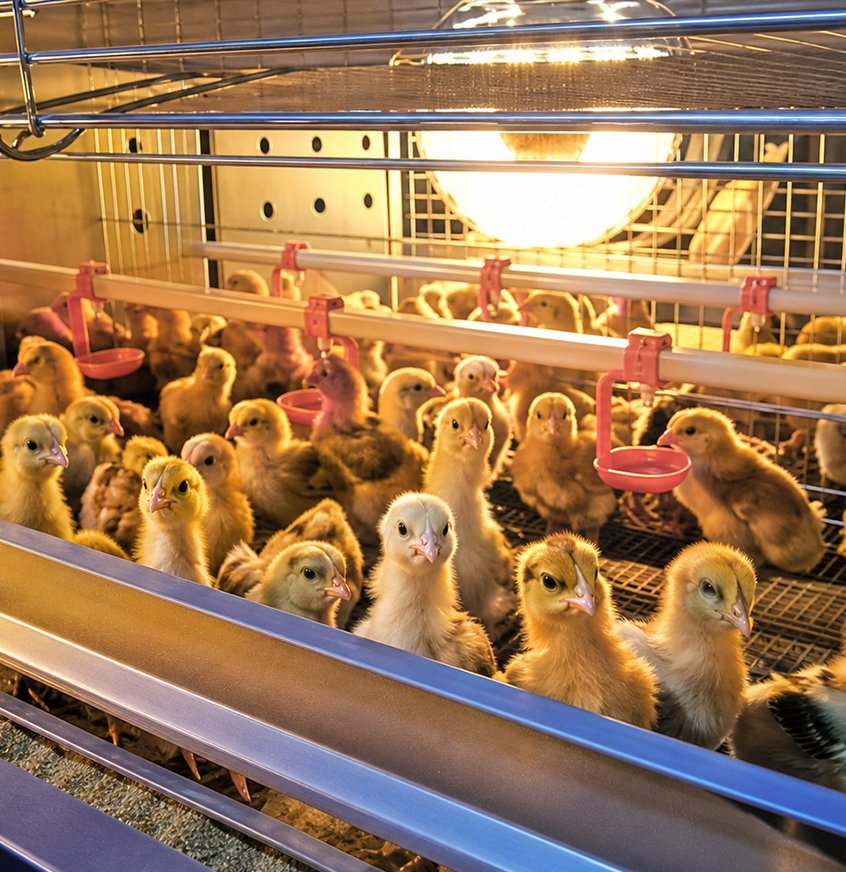
Product Introduction
The Smart Automatic Chick Rearing & Pullet Cage System is an integrated, space-saving solution designed to raise poultry from Day 1 (day-old chicks) up to 16-18 weeks (pullets) without the need to change cages. Available in 3 to 8 tiers, this high-density rearing system seamlessly combines feeding, drinking, manure removal, climate control, and IoT monitoring. It creates the ideal micro-climate for fragile chicks while reducing labor costs and drastically improving flock uniformity before the egg-laying stage.
Feature and Advantage
- Integrated System & High Automation (3-8 Tiers Customizable)
- A tiered cage system specially designed for young chickens (chicks/pullets), available in 3 to 8 tiers based on project needs.
- Completely integrates key modules: cage body, feeding, drinking, manure cleaning, lighting, environmental control, and IoT.
- Simple to operate and highly automated, ensuring high overall flock uniformity.
- Scientific & Ergonomic Cage Design
- Sufficient Feeding Space: Well-structured cages provide ample feeding positions for each bird.
- Inner-Push Cage Door: Easy to open, making bird handling and catching effortless.
- Traveling/Trolley Feeding: Delivers fast, precise, and uniform feed distribution.
- Lifting Water Line: Height-adjustable to match the drinking habits and physical growth of chickens at all stages.
- Automated Manure Removal & Smart Climate Control
- Automatic Manure Cleaning: Simple, practical, and efficient system that keeps the poultry house clean and hygienic.
- Smart Environmental Control System: Automatically adapts to all growth stages from day-old chicks to pullets, creating an ideal micro-climate inside the house.
Applicable Scope
Specialized pullet rearing farms, commercial layer breeding centers, large-scale poultry integration companies, and day-old chick brooding projects.
Why Choose Us
- Zero-Stress Transition: Chicks grow from Day 1 to the pullet stage in the same cage. No re-caging required, eliminating transfer stress and mortality.
- Superior Flock Uniformity: Precise automated trolley feeding and step-less lifting water lines ensure every chick gets equal feed and water access.
- Hygienic & Easy to Operate: Inner-pushing cage doors make chick inspection and harvesting effortless. Automatic belt manure removal keeps the indoor environment dry and disease-free.
OEM/ODM Services
We tailor the chick-rearing cage system to your farm’s building dimensions and capacity requirements:
- Tier Selection: 3, 4, 5, 6, 7, or 8 tiers.
- Feeding System: Trolley/Traveling feeding machine or Chain feeding system.
- Custom Features: Specialized chick mesh spacing, adjustable trough edges, automated heating/climate control integration.
- Send us your poultry house sizes (Length x Width x Height), and our engineering team will provide a 3D customized farm layout for free!
FAQ
Q1: At what age can chicks enter this cage system, and when do they leave?
A1: Day-old chicks (1-day old) can be placed into the system directly after hatching. They can remain in the system until they are ready to transfer to layer cages at 16-18 weeks of age.
Q2: How do small chicks reach the food and water?
A2: During the “nurturing status”, special chick bottom pads/mats are used, and the drinking water lines can be lowered to the chicks’ eye level. As they grow, the water line is gradually lifted.
Q3: How does the inner-push door benefit the operation?
A3: The inner-push cage door slides inside without occupying space in the aisle. It makes daily inspection easier and reduces bird escape or damage to the birds during catching.
Q4: Can the environmental control system automatically adjust heat for chicks?
A4: Yes. Chicks require higher temperatures (around 33-35°C initially). Our automated climate control system integrates heater controls, ventilation, and temperature sensors to adjust the environment automatically as chicks grow.
Q5: How many chicks can be housed in one cage unit?
A5: Capacity depends on the cage unit size and bird age. Generally, the system allows high-density brooding in the early weeks, and birds are thinned out into surrounding tiers/cages as they grow into the pullet stage.