

Layer Poultry Farming Equipment: A Practical Checklist for Commercial Egg Farms
A layer-house equipment list is only useful when the systems fit the building and the daily workflow. If the egg belt has nowhere practical to transfer, or manure has no defined route out of the house, adding automation can create new handling problems instead of solving old ones.
Start by deciding how the birds will be housed and how eggs and manure will move through the farm. Then specify the equipment around those decisions. This checklist covers the main layer poultry farming equipment groups and the questions worth resolving before requesting a quotation.
1. Set the project requirements before selecting equipment
Write down the target flock size, bird age and production stage, house dimensions, local climate, available water and electrical supply, and the number of people available for daily checks. Also decide what happens after eggs leave the house and where manure will be stored, treated or used.
The housing system comes first. Caged and floor-based systems have different layouts and daily workflows; other systems, including aviary or cage-free designs, may be subject to local welfare rules and market requirements. Confirm permitted housing types, stocking and building requirements with the relevant local authorities and your production adviser before finalizing a design. Mississippi State University Extension describes both caged-layer and floor-production approaches and notes that their equipment arrangements differ.
2. Layer poultry equipment checklist
Housing and bird access
Choose the cage, floor or other housing arrangement before fixing the location of feeders, drinkers, nests, perches, walkways and service access. Check that staff can inspect equipment and birds without obstructing egg transfer or routine cleaning. For floor or cage-free systems, include the relevant nest and perch arrangements in the layout; do not assume a cage-house drawing can simply be reused.
Dawei’s layer cage product page describes one A-type cage option. Treat that page as a product reference, not a substitute for a site-specific layout. Ask the supplier to confirm dimensions, capacity, compatible accessories, local compliance and the complete scope in writing.
Feed storage and distribution
A commercial feeding line is more than a feeder. The full route may include a silo, conveying equipment, distribution lines, drives and controls. Check that the proposed system can deliver feed along the intended house layout and that operators can inspect flow, adjust components and reach wear parts.
Ask what is included between the silo and the bird-level feeders. Clarify whether installation, electrical work, control panels, spare parts and commissioning are included or priced separately. The Dawei poultry equipment catalogue lists feeding systems alongside other poultry equipment categories.
Drinking water
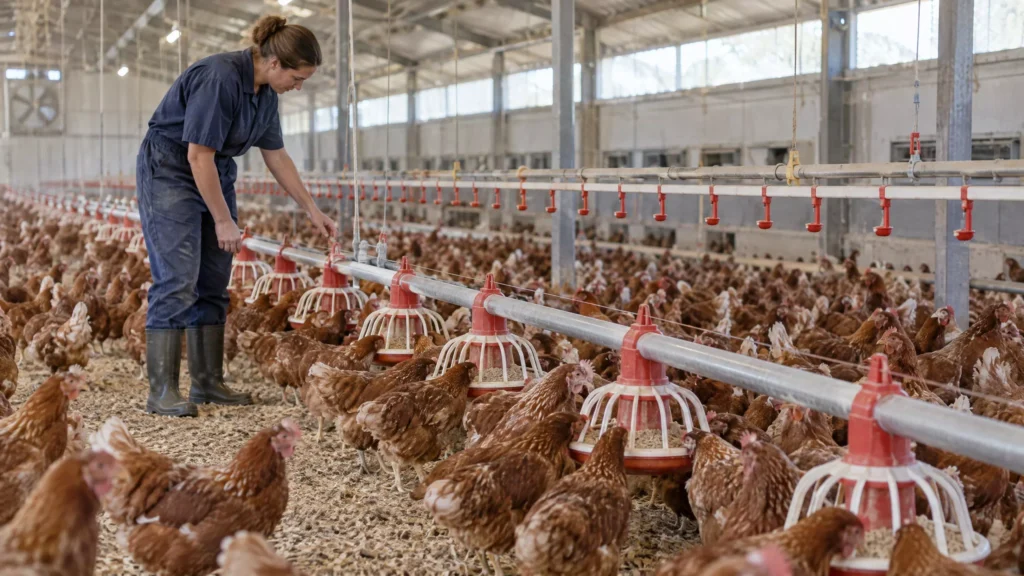
Plan the water supply with the same care as the feed route. Confirm the source, expected pressure, filtration or treatment needs, line arrangement, shutoff points and a practical way to flush and inspect the system. Fresh, clean water should remain available to the flock; the exact drinker type and layout should match the housing system and the supplier’s specifications .
Ask how staff will identify a blocked or leaking line and how pressure regulators and filters are serviced. Water quality varies by location, so a generic equipment list cannot replace a water test or project-specific design.
Nesting and egg collection
For floor-based systems, include nests and the route eggs take from the nest to collection. For cage systems, specify the egg-rolling and transfer arrangement. In either case, map every transfer point—from the row or nest area through conveyors to the collection or packing area—and check that staff can reach it for inspection and cleaning.
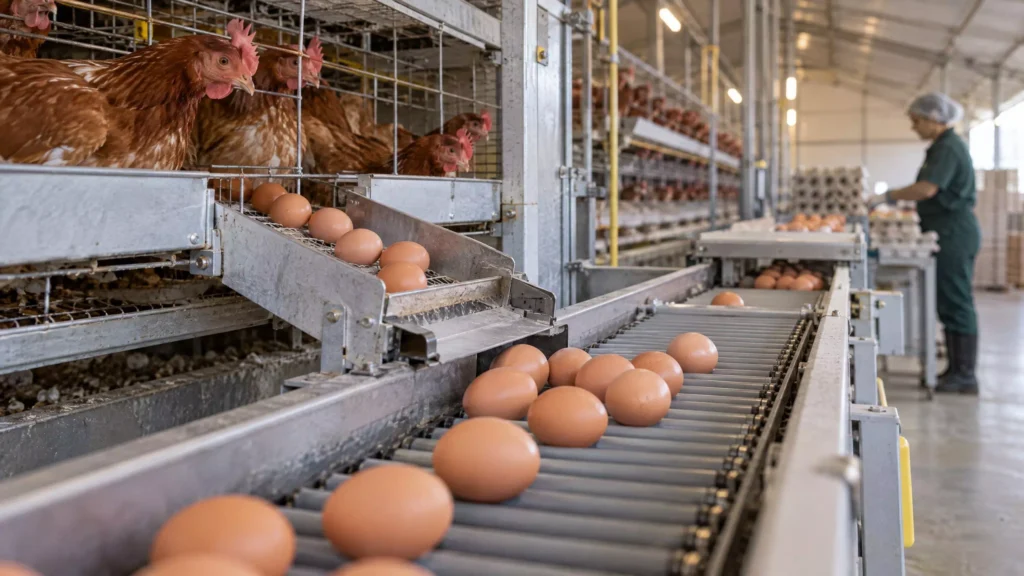
Ask for the expected handling sequence and identify which downstream items are included: cross conveyors, elevators, grading or packing equipment, and collection-room work may be outside the poultry-house equipment quote. Do not compare egg-handling proposals by the phrase “automatic egg collection” alone; compare the route and equipment schedule.
Manure removal and handling
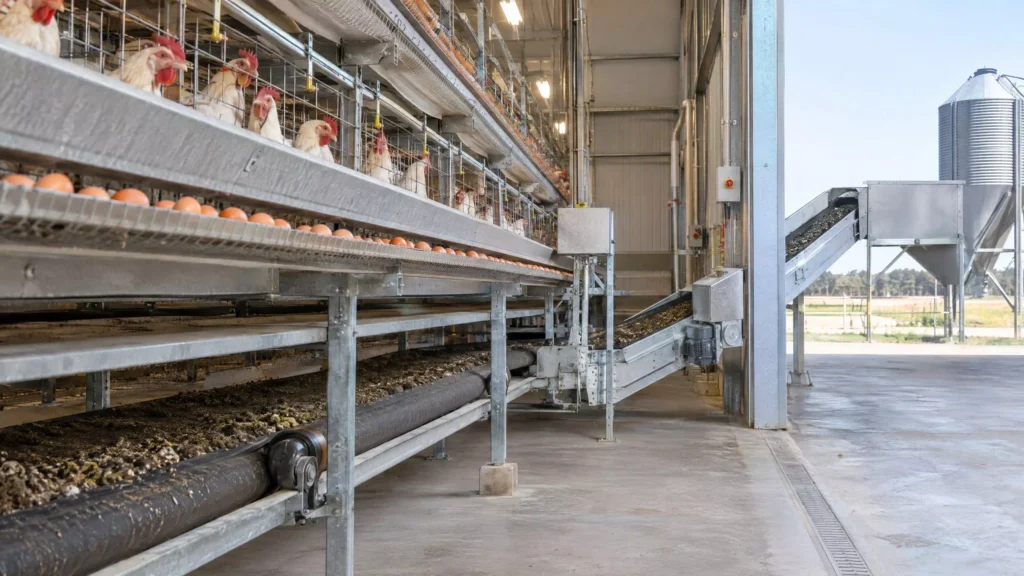
Decide where manure will go before selecting the removal method. Belt systems and high-rise storage arrangements involve different removal schedules, ventilation considerations and maintenance tasks. Mississippi State University Extension explains that manure-belt systems convey manure outside the house, while high-rise systems store it beneath the birds; actual practices vary by housing design and farm management .
Ask how the manure leaves the house, how often the system is intended to run, what cleaning and belt maintenance require, and where the material will be stored or further managed. Manure can be a useful nutrient resource, but poor handling can create air- and water-quality concerns; storage and land application should follow local environmental requirements .
Ventilation, lighting and controls
Fans, inlets, cooling, heating and controls should be sized and located as a coordinated system. The right configuration depends on the house, climate and production plan. A University of Georgia poultry-house guide describes ventilation as a combination of fans, air inlets, cooling equipment and controls, and discusses the need to manage different weather conditions .Because that guide focuses on broilers, use it here for general system relationships—not as a layer-specific operating prescription.
Lighting also belongs in the layout discussion. Fixture placement, controllability and maintenance access should be planned around the birds and house design. Mississippi State Extension notes that light management is part of managing laying hens ; production schedules should be set with a qualified flock adviser and the applicable breed guidance, not inferred from an equipment list.
Ask how alarms report power loss or abnormal house conditions, and whether backup power is included or must be supplied separately. Confirm electrical design, generator capacity and transfer arrangements with qualified local professionals.
3. Compare quotations by scope, not by headline price
Request an equipment schedule and a marked-up house layout from each supplier. Check whether both proposals cover the same housing type, flock capacity, feed and water lines, egg route, manure equipment, ventilation, controls, installation and commissioning. A shorter list can still be the more complete offer if it includes items another supplier has left out—or the reverse.
Dawei’s farm design and installation services page describes custom design, installation guidance and after-sales support. Ask which of these services apply to your project, who performs on-site work, what utilities or building work remain your responsibility, and how spare parts are supplied.
4. A pre-order checklist
Before approving a design, make sure you can answer these questions:
- Does the layout match the housing system and the intended flock capacity?
- Can staff reach feeders, drinkers, drives, belts, filters and control points for routine inspection?
- Is the water source and quality understood, and are flushing and shutoff arrangements defined?
- Is the complete egg-transfer path shown, including the handoff to the collection or packing area?
- Is the manure route, storage plan and removal schedule clear?
- Are ventilation, lighting, alarms and backup power requirements documented?
- Does the written quote state what is included, excluded, installed, commissioned and supported?
Send the supplier a house drawing, flock and production details, site climate, water and power information, egg-handling requirements, and manure plan. The more specific the brief, the easier it is to compare proposals on the same basis.
Frequently Asked Questions
What equipment does a commercial layer farm need?
Most projects need a defined housing system, feed and water delivery, lighting and environmental management. Depending on the housing and production workflow, the farm may also need nests, egg collection, manure removal, controls and downstream egg handling. The final list should follow the house layout and local requirements.
Does a layer farm need automatic egg collection?
Not every farm uses the same level of automation. Consider flock size, labor availability, house layout and where eggs will be handled after collection. If you automate collection, plan the transfer path and cleaning access along with the conveyor itself.
What is the most important detail to send when asking for a quote?
Send the house drawing and describe the housing system, flock capacity, production stage, site climate, water and electrical supply, egg route and manure plan. A bird count without these details is not enough to establish a project-specific equipment layout.
Can one equipment package suit every layer house?
No. House dimensions, housing type, local climate, utilities, labor and downstream handling all affect the design. Ask for a proposal based on your own site and confirm the final specifications and installation scope in writing.
Conclusion
The right layer poultry farming equipment list is built from the house outward. Set the housing and workflow first, then coordinate feeding, water, egg handling, manure removal and environmental control around them. Before ordering, compare full layouts and scope—not product names alone—and make sure the system can be inspected and maintained by the people who will run the farm.
For a project-specific discussion, contact Dawei’s poultry equipment team with your house drawing, flock details and site requirements.