

A-Type Layer Chicken Cage: What to Check Before Ordering
A cage quotation can look complete while leaving out the parts that determine whether the system fits the house. The cage rows may be priced, but the service aisle, feed route, drinker supply, egg transfer and manure handling still need to be shown on the same plan.
Before comparing A-type layer chicken cage prices, confirm that cage housing is permitted for the destination market and suitable for the farm’s operating plan. Then ask each supplier for a project drawing and a written equipment schedule. A product name or nominal bird capacity is not enough to compare two offers.
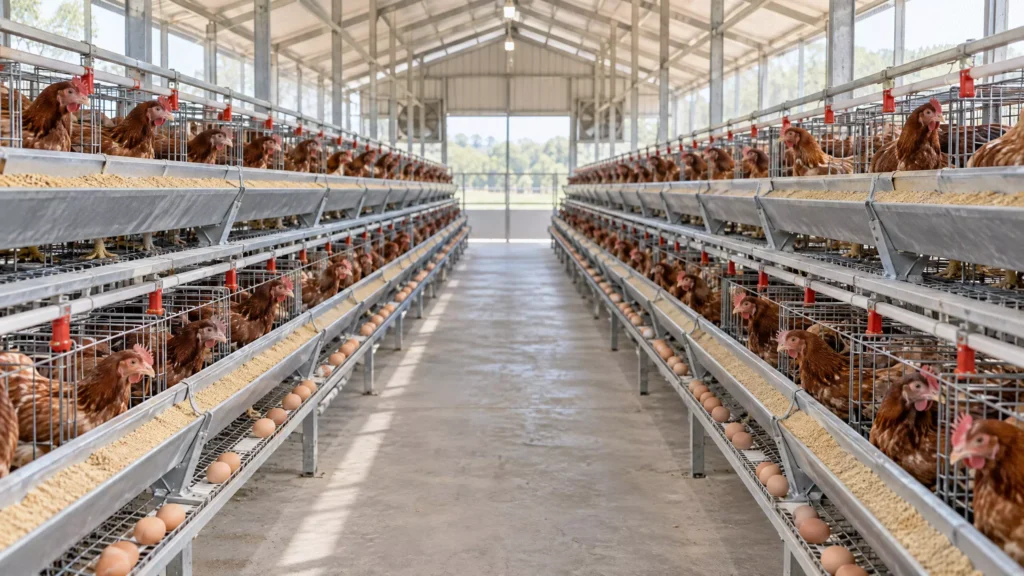
Treat “A-type” as a configuration label, not a complete specification
Suppliers use A-type to describe a cage arrangement, but the label alone does not define the full project. Tier count, row layout, module dimensions, bird capacity, supporting frame, feeding and drinking equipment, egg collection, manure removal and installation scope can vary.
Start with the Dawei A-Type layer chicken cage product page as a product reference. For a quotation, ask for the current configuration drawing and specification sheet that match your house. Confirm that the listed model, dimensions, finish, accessories and commercial terms are the same ones being quoted.
Check local housing rules before choosing a cage
The intended market can change the decision before engineering begins. Caged-layer and floor-production systems use different layouts and equipment arrangements, as Mississippi State University Extension notes in its layer-hen management guidance.
Rules also differ by country and may be stricter than a supplier’s standard package. For example, the European Commission states that non-enriched cage systems have been prohibited in the EU since 1 January 2012. That is an EU-specific example, not a global rule. Check the current requirements in the country where the eggs will be produced and sold, along with any retailer, processor or certification standard that applies to the farm.
If the applicable standard is unclear, resolve it with the local authority or a qualified poultry adviser before asking suppliers to finalize the cage layout. Changing the housing system after the building plan or equipment order is fixed can mean redesigning connected equipment as well.
Put the house layout on paper
Give suppliers the building’s internal length and width, column locations, doorways, floor levels and any fixed service areas. Ask them to show the cage rows, end access and operator aisles on a dimensioned plan. A plan view should make it possible to see where staff will walk and where equipment will be serviced without blocking egg or manure movement.
Check the vertical section as well as the floor plan. The number of tiers affects headroom, lighting access, ventilation arrangements and how staff reach components that need inspection. Ask the supplier to show the overall installed height and the clearance needed above, below and at the ends of the rows. Do not rely on a catalogue image to confirm fit.
Capacity should be checked against the usable area and the rules for the target market—not just copied from a headline figure. Ask the supplier to state how the quoted capacity is calculated and to identify the exact cage configuration used in that calculation.
Define what is included in the package
A cage unit and a working layer-house system are not necessarily the same scope. One quotation may cover only cage frames and mesh. Another may include feeders, drinker lines, pressure regulators, manure belts, egg conveyors, drives, controls, installation or commissioning.
Ask each supplier to mark every item as included, optional or excluded. For the lines that connect to other equipment, request a simple handoff drawing: where feed enters the house, where water is regulated and flushed, where eggs leave the row, and how manure reaches its next handling point. The broader poultry equipment catalogue can help identify related product categories, but the quotation should name the actual components supplied for your project.
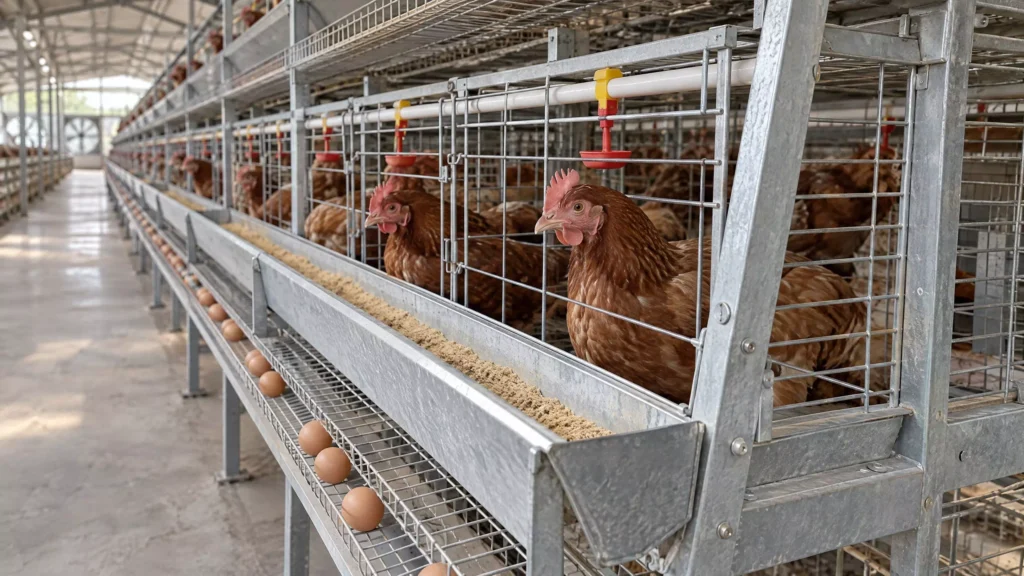
Inspect materials, access and maintenance details
Ask what material and protective finish are specified for the frame and wire components. The quotation should identify the exact finish, wire dimensions and relevant drawings or technical documents. If durability or corrosion resistance is important for the farm’s climate and cleaning routine, request evidence and written warranty terms rather than relying on a general lifespan claim.
Review doors, fasteners, edges and access points in the drawings or a sample unit. Staff need to reach birds and routine service points without improvising around the structure. Ask how drinker lines are isolated and flushed, how feed build-up is removed, and how the egg and manure equipment can be inspected safely. Maintenance procedures should follow the supplier’s instructions and the farm’s own safety rules.
The Dawei product page describes several A-type configuration options. Before ordering, confirm the exact option and all included accessories with Dawei in writing; do not assume a photo, web listing or sample represents the final configuration.
Compare quotations by scope, not just price
A lower equipment price may exclude installation, electrical work, control components, spare parts or commissioning. A higher price may include those items—or may not. Ask suppliers to identify freight and unloading responsibility, installation boundaries, commissioning checks, operator training, warranty coverage and the process for ordering replacement parts.
Have each supplier quote against the same drawing and scope list. If a proposal includes a different tier count, row arrangement or automation level, ask for a revised version before comparing totals. This keeps the decision focused on equivalent packages rather than similar-sounding product names.
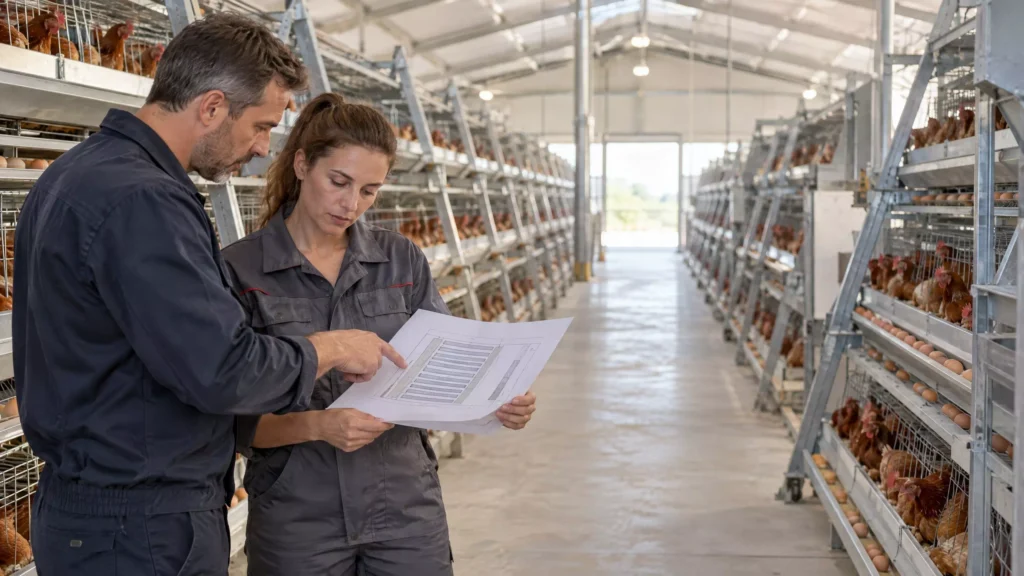
Pre-order questions for the supplier
Before approving an A-type layer chicken cage order, make sure the supplier has answered these questions:
- Is this housing system allowed under the rules and customer standards for the target market?
- Does the drawing show the building dimensions, columns, cage rows, tiers, aisles and service clearances?
- How is usable bird capacity calculated for the exact configuration?
- Which frame, mesh, coating and accessories are included in the quoted model?
- Are feeders, drinker lines, regulators, manure removal and egg conveyors included, optional or excluded?
- Where do feed, water, eggs and manure enter or leave the system?
- Who is responsible for installation, electrical work, commissioning and operator training?
- Which spare parts are recommended, what warranty terms apply and how are service requests handled?
Send the supplier a dimensioned house plan, the target flock and production details, the destination market, available utilities and the equipment scope you expect. If the site is still at an early planning stage, ask for the proposed layout before fixing building openings or ordering connected equipment.
Frequently Asked Questions
What does an A-type layer chicken cage include?
The name does not guarantee a standard package. Depending on the supplier and project, it may refer to a cage arrangement with different tiers or door configurations. Confirm the exact model, dimensions, accessories and connected systems on the current quotation and drawing.
Is an A-type layer cage suitable for every poultry farm?
No single cage arrangement suits every site or market. Local housing rules, customer standards, building dimensions, flock plan, labor and automation requirements all affect the decision. Confirm those conditions before comparing cage prices.
What information should I send when requesting a quote?
Send a dimensioned building plan, target flock size, destination market, preferred production system, utility information and a list of equipment you expect the supplier to include. Note whether you need help with layout, installation or commissioning.
Can I compare suppliers by the number of birds per cage?
Capacity alone is not enough. Ask how the figure is calculated, what exact configuration it refers to and whether it complies with the rules that apply to your market. Compare the full layout and included equipment as well.
Conclusion
Choose an A-type layer chicken cage only after the local housing requirements, building layout and complete equipment scope are clear. Ask for a dimensioned drawing and a written schedule that identifies what is included, optional and excluded. Then compare equivalent offers and confirm the final configuration before ordering.
For a project discussion, send Dawei your house drawing, target flock details and destination market through its farm design and installation services or contact page.