

Modern Poultry Farming Equipment: A Practical Upgrade Roadmap
Modern poultry farming equipment is not simply a longer list of machines. A farm becomes easier to manage when housing, feed and water delivery, ventilation, flock handling and controls fit the same production plan. If one part is upgraded without checking its connections to the rest of the house, the result can be a new bottleneck rather than a better workflow.
For a new build, plan the systems together from the start. For an existing chicken farm, begin by identifying the task that creates the most daily friction, then check what else must change for an upgrade to work. The right order depends on the house, flock type, local climate, utilities and the people who will operate and maintain the equipment.
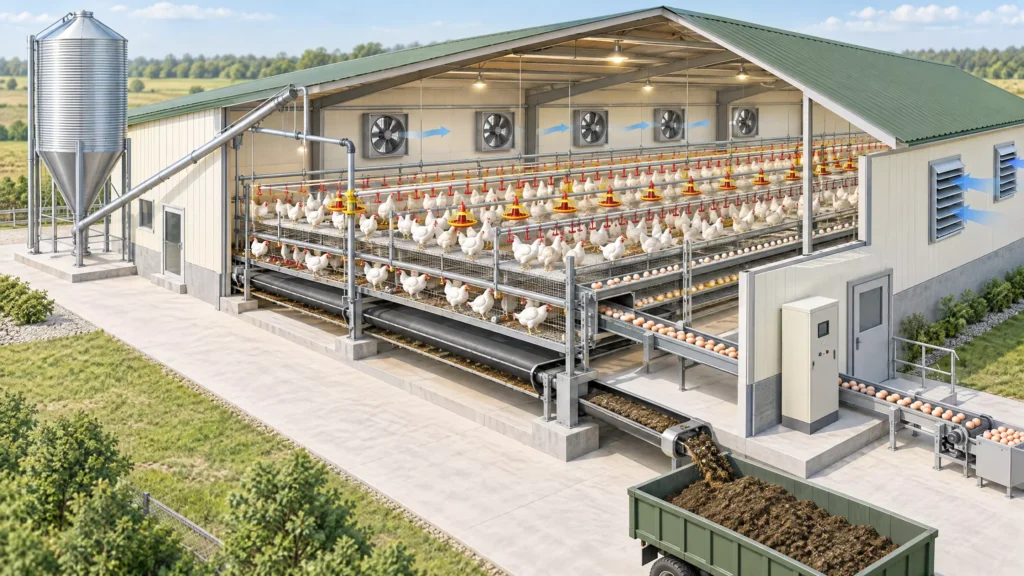
What makes a poultry farm “modern”?
Modernization is better measured by how reliably a farm performs routine work than by how many controls or machines it has. Automated feeding, water delivery, manure removal, egg collection and environmental controls can reduce manual handling, but each system still needs suitable house conditions, inspection access and a maintenance plan.
Dawei describes its equipment range around feeding, drinking, manure removal, egg collection and environmental control. These categories offer a useful starting point for a project discussion, but the final package should match the farm’s production type and layout.
The equipment systems to plan together
Housing and layout
The house determines where equipment can go and how people move through the workday. Before choosing machinery, confirm flock type and target capacity, building dimensions, housing approach, service aisles and access for cleaning and repair. The Food and Agriculture Organization notes that poultry housing should protect birds from adverse weather, provide ventilation and temperature control, and be inspected and maintained.
For farms considering cage or floor systems, compare the daily operating workflow as well as the equipment arrangement. Dawei’s cage farming systems and floor farming systems are examples of different housing-system categories. Confirm local requirements and the design’s fit for the actual site before specifying a system.
Feed and water delivery
A modern feeding setup may connect bulk storage, conveying equipment, distribution lines, drives and feeders. Map the route from storage to the birds, and ask where operators can check flow and reach service parts. Confirm the supply, controls and electrical scope in writing; quotations may not include every connection between components.
Water equipment should be planned around the source, quality, pressure, treatment or filtration needs, line arrangement and flushing access. Staff need a practical way to notice leaks or blockages and to isolate sections for service. Water quality and supply differ from farm to farm, so verify the design with project-specific information rather than relying on a generic equipment list.
Ventilation and environmental control
Fans, air inlets, cooling or heating equipment, sensors and controllers work as a coordinated environmental system. The University of Georgia’s poultry housing resources cover fan selection and maintenance, air inlets, cooling, environmental controllers, water quality and seasonal ventilation, among other topics. That range of factors is why equipment selection should follow the house design and local weather rather than a catalogue description alone.
Ask the supplier to show the design basis and explain how the controls, sensors, alarms and backup-power plan fit together. Have electrical and generator requirements checked by qualified local professionals. Operating settings should follow flock-specific guidance and the equipment manufacturer’s instructions.
Egg collection, manure removal and other handling
Layer farms should draw the complete egg route, from the house to the next collection or packing point. Mark each conveyor transfer and identify which downstream equipment is included. A system described as “automatic” may cover only part of that route, so ask for a clear equipment schedule.
Manure removal should also be planned around its destination, service access and routine cleaning. Clarify how material exits the house and what storage or further handling is expected. Other production types have different bird-handling requirements; specify equipment according to the farm’s actual workflow.
Monitoring, alarms and service access
Controls can coordinate equipment and help staff see operating conditions, but they do not replace regular checks. Decide what should trigger an alarm, where the alert goes, and who responds. Ensure operators can safely reach sensors, drives, filters, belts and control points for inspection.
Before ordering, ask about training, manuals, spare parts, warranty terms and the process for technical support. The equipment supplier’s service commitments should be stated specifically in the proposal rather than assumed from a general product description.
A phased modernization plan for a chicken farm
Start with a site review. Record the house dimensions, flock plan, current equipment, utility capacity, recurring maintenance issues and the daily tasks that consume the most staff time. A simple floor plan with equipment positions and material routes is more useful than a list of product names.
Next, prioritize upgrades by dependency. A new controller may not solve an airflow problem if fans, inlets or house sealing need attention. A feed line may require changes to storage or electrical connections. Identify these dependencies before comparing prices.
Then compare proposals on matching scope. Ask each supplier to mark equipment on the same house drawing and state what is included for supply, installation guidance, commissioning, training and after-sales support. Dawei’s farm design and installation services describe custom farm design, installation guidance and support; ask which services are available for the specific project and location.
Finally, plan the handover. Assign responsibility for routine checks, cleaning, alarm response and preventive maintenance. A phased project can be easier to manage, but only if each stage leaves the farm with compatible equipment and a workable operating procedure.
Common mistakes when choosing modern poultry farming equipment
Buying by product name alone. Two offers may use the same system label but cover different components. Compare the equipment schedule and layout.
Treating automation as maintenance-free. Automated systems still need inspection, cleaning, adjustment and spare parts. Include these tasks in staffing and training plans.
Ignoring site utilities. Electrical capacity, water supply and backup power can limit what a system can do. Confirm requirements before finalizing the order.
Upgrading one system without checking interfaces. Feed, water, ventilation, handling and controls affect one another. Review the whole workflow around a proposed change.
Assuming one design fits every farm. House dimensions, climate, production type, labor and local rules all change the specification.
Frequently Asked Questions
What equipment does a modern chicken farm need?
Most commercial farms need housing, feeding, drinking-water delivery and a way to manage the house environment. Depending on production type and workflow, the equipment plan may also include egg collection, manure removal, bird handling, controls and alarms. Confirm the final list against the site and local requirements.
What should I upgrade first on an existing poultry farm?
Start with a site assessment rather than a universal upgrade order. Identify operational bottlenecks, equipment condition, utility limits and dependencies between systems. Prioritize changes that address a documented need and can be integrated with the rest of the house.
Does modern poultry equipment mean full automation?
No. Modernization can be staged. Some farms may automate selected tasks while keeping other work manual. Choose an automation level that the building, utilities, staff and maintenance resources can support.
What information should I send to a poultry equipment supplier?
Provide the house drawing and dimensions, flock type and capacity, current equipment, site climate, water and electrical information, desired workflow and any relevant local requirements. The more complete the brief, the easier it is to compare proposals on the same basis.
Conclusion
Modern poultry farming equipment works best when it is selected as a coordinated operating system, not as a collection of standalone machines. Map the house and daily workflow, identify upgrade dependencies, and compare proposals by layout, included scope, utilities and service support. That approach helps a farm modernize at a pace that fits its real operating conditions.
For a project-specific discussion, contact Dawei through its poultry equipment website with the house plan, flock details and upgrade priorities.