

How Poultry Farm Equipment Improves Daily Farm Efficiency
Running a commercial chicken farm involves a long list of daily jobs. Feed must be delivered, water lines need checking, manure has to be removed, eggs must be collected, and the poultry house needs to stay within suitable environmental conditions.
When flock numbers increase, these jobs become harder to manage with manual labor alone. This is where the right poultry farm equipment makes a practical difference.
Automatic feeding, drinking, manure removal, egg collection, and climate control systems can take over many repetitive tasks. Workers can spend less time moving feed or collecting eggs by hand and more time checking birds, inspecting equipment, and dealing with problems that need attention.
For commercial farm owners, the goal is not to automate everything for the sake of it. It is to identify where time and labor are being spent and choose equipment that makes those daily operations easier to manage.
At Dawei Poultry, we supply integrated equipment solutions for layer, broiler, and breeder farms. This article looks at how different systems affect everyday farm operations and what to consider when planning an equipment upgrade.
1. The Real Cost of Repetitive Work on a Chicken Farm
On a small poultry farm, manual work may be manageable. Workers can carry feed, check drinkers, clean the house, and collect eggs as part of their regular routine.
The situation changes when a farm operates several poultry houses or manages tens of thousands of birds.
Consider a typical commercial layer house. Workers may need to:
.Check feed levels and distribute feed.
.Inspect drinking lines and water pressure.
.Collect eggs from different cage rows.
.Remove accumulated manure.
.Check fans and other environmental equipment.
.Clean and inspect areas around the production system.
.These tasks happen repeatedly throughout the production cycle.
The problem is not always that one job takes too long. It is the combined time spent moving between different areas, handling materials, and repeating the same operation every day.
A properly designed chicken farm equipment system helps reduce this unnecessary movement.
For farm managers, a useful starting point is to record how many workers are assigned to each task, how long each operation takes, and where delays occur. This creates a more reliable basis for deciding which equipment should be automated first.
2. Automatic Feeding Systems Reduce Daily Manual Handling
Feed distribution is one of the most regular jobs in poultry production.
On farms using manual feeding, workers may need to transport feed into the house and distribute it along feeding areas. As the number of birds and house length increase, this work becomes more demanding.
An automatic feeding system moves feed from storage equipment to the feeding lines inside the poultry house.
A typical arrangement may include feed silos, conveying equipment, motors, distribution lines, and feeders.
What Changes After Installing Automatic Feeding?
The main difference is how feed reaches the birds.
Instead of carrying feed from one feeding point to another, workers can operate and inspect a fixed distribution system.
This helps with:
Reducing repeated manual feed transportation.
Maintaining a more consistent feeding routine.
Distributing feed along longer poultry houses.
Reducing unnecessary movement inside the house.
Making feeding equipment easier to monitor as one system.
However, automatic feeding still needs regular inspection. Workers should check whether feed reaches the full length of the line, whether feeders are adjusted correctly, and whether motors and conveying components are operating normally.
A poorly adjusted line can create problems even when the feeding system is fully automated.
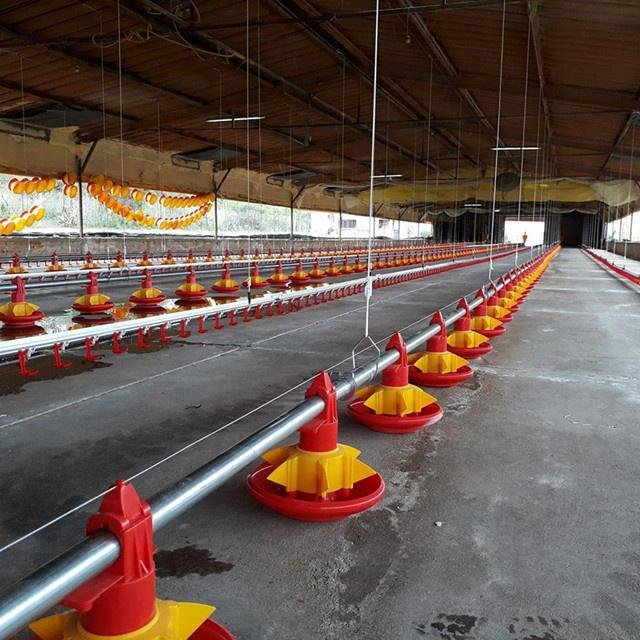
Dawei’s automatic feeding equipment includes feeding solutions for different poultry operations, including automatic hen pan feeding systems and dedicated male and female breeder feeding systems.
View the Dawei Automatic Poultry Feeding Systems to see available equipment.
3. Automatic Drinking Systems Make Water Management Easier
Water is another area that requires regular attention.
On a commercial farm, workers cannot simply assume that every drinking line is working because water is available at the main supply point.
Pressure differences, blocked nipples, leakage, and filter problems can affect water delivery along the line.
An automatic nipple drinking system provides drinking points along the poultry house and can be configured with pressure regulators and filtration components.
Why Water Line Design Matters
In a long poultry house, water pressure needs to be suitable at different positions along the line.
If the pressure is too high or too low, drinker performance may become inconsistent. Leaks can also increase unnecessary moisture around the birds and create additional cleaning work.
A properly planned drinking system should consider:
Water pressure at the beginning and end of the line.
Nipple spacing and installation height.
Pressure regulation.
Water filtration.
Pipe flushing and cleaning.
Access for replacing damaged components.
Automation does not remove the need to check water quality and drinker performance. It gives farm workers a more organized system to inspect and maintain.
Dawei supplies automatic poultry drinking equipment, including water pressure regulation equipment for nipple drinking lines.
4. Manure Removal Equipment Reduces Repeated Cleaning Work
Manure handling is one of the most physically demanding jobs on many commercial poultry farms.
Without a suitable removal system, workers may need to spend considerable time cleaning accumulated waste and transporting it away from the poultry house.
For cage-based layer operations, automatic manure belts or mechanical scraping systems can reduce the amount of manual handling required.
How Automatic Manure Removal Helps
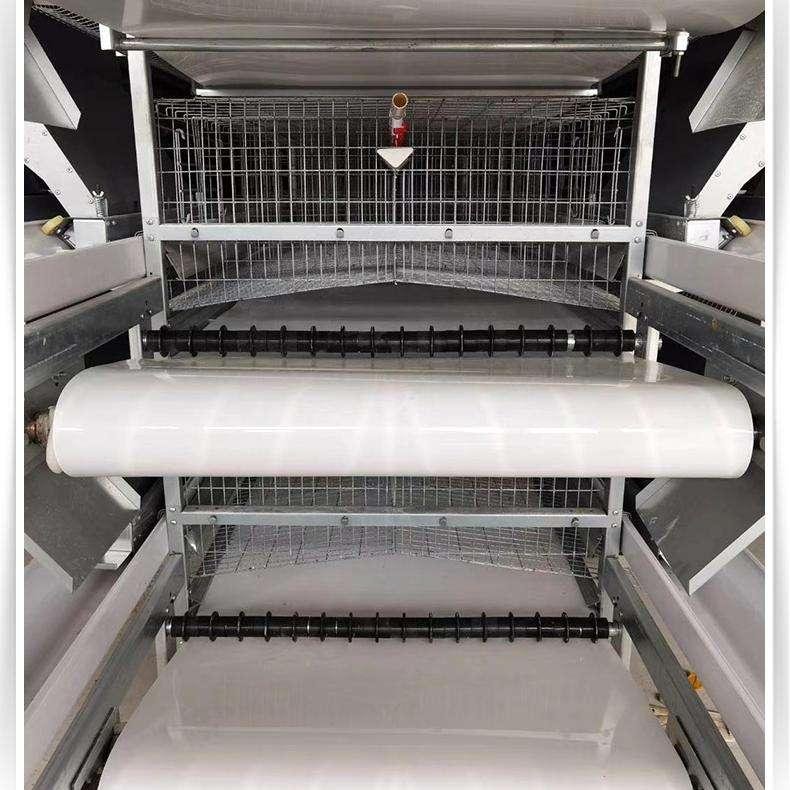
In a typical belt-based arrangement, manure falls onto belts installed beneath the cage rows. The belt moves the waste toward a designated collection or transfer point.
The system can include:
Manure belts.
Driving motors.
Rollers and belt supports.
Belt adjustment components.
Cross conveyors or discharge equipment.
The benefit is not simply that manure moves automatically. It also gives farm managers more control over the cleaning schedule.
Workers can inspect the belts, check alignment, and organize waste removal without manually cleaning every cage row.
What Should Be Checked During Operation?
Pay attention to belt tracking, tension, roller condition, motor operation, and the manure discharge point.
If a belt moves unevenly or material accumulates around the rollers, the problem should be corrected before it leads to extended downtime.
For suitable projects, Dawei provides Automatic Manure Removal Systems.
Regular removal should also be coordinated with the farm’s manure storage and disposal plan.
5. Automatic Egg Collection Reduces Unnecessary Handling
For commercial layer farms, egg collection can become a major daily workload.
When eggs are collected manually, workers have to move between cage rows, remove eggs, carry them, and transfer them toward the collection or packing area.
The amount of work increases as the number of production rows grows.
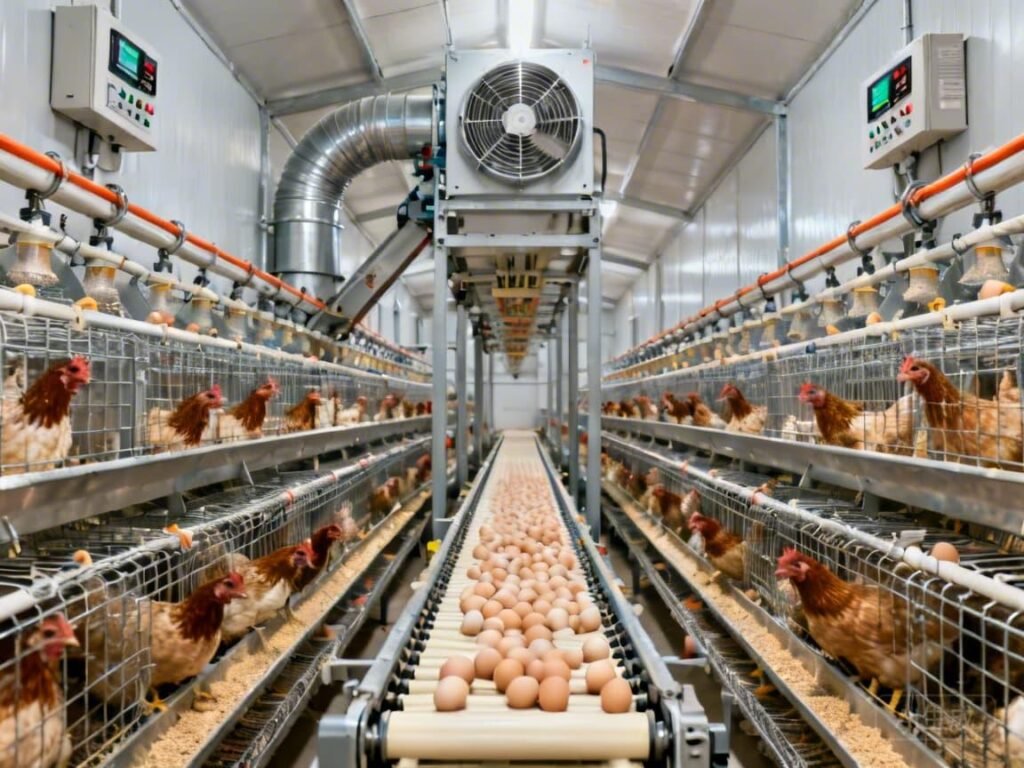
An automatic egg collection system changes this process by using egg belts and conveyors to move eggs toward a central collection point.
Why the Transfer Route Matters
The equipment needs to be arranged so eggs can move smoothly from the cage rows to the collection area.
Several details deserve attention:
Egg belt alignment.
Conveyor transfer positions.
Belt speed and operating consistency.
The number of transfer points.
Access for inspection and cleaning.
Poorly aligned belts or abrupt transfers can increase the risk of cracked eggs.
A well-designed system reduces unnecessary handling, but it does not eliminate the need for workers to inspect egg quality and monitor conveyor operation.
Dawei includes automatic egg collection in its integrated poultry farming solutions. You can visit the Dawei Poultry website to discuss a layer farm configuration.
6. Climate Control Equipment Helps Stabilize Daily Farm Management
Feeding and cleaning are visible daily tasks. Climate control is less obvious, but it has a major influence on poultry house operation.
Temperature, humidity, air movement, and ventilation conditions change throughout the day and across different seasons.
Without suitable equipment, workers may need to make repeated manual adjustments as weather conditions change.
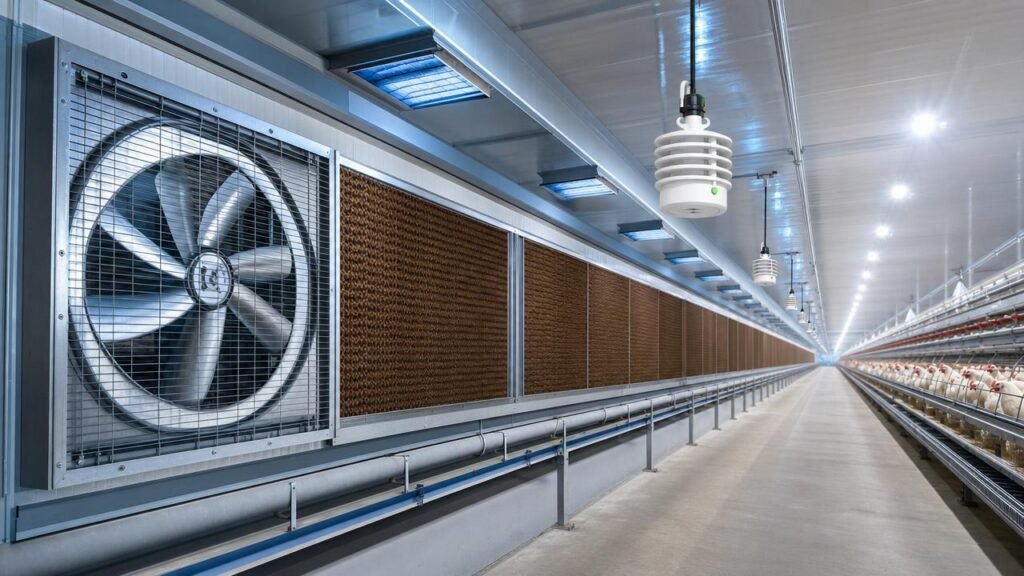
A poultry climate control system helps coordinate the equipment used to manage the indoor environment.
Depending on the house design, this may involve:
Exhaust ventilation equipment.
Air inlet arrangements.
Cooling equipment.
Environmental sensors.
Control systems.
Insulated poultry house structures.
Ventilation Should Match the Building
Installing more fans does not automatically guarantee better ventilation.
Airflow depends on the house dimensions, fan capacity, inlet positions, building sealing, bird numbers, and local climate.
For farms in hot and humid regions, these factors become especially important.
A house that is not properly designed may have uneven airflow, leaving some areas warmer or less ventilated than others.
This is why poultry house construction and environmental equipment should be considered together.
Dawei supplies Poultry Climate Control Systems and steel structure poultry houses for commercial farming projects.
7. Different Farms Need Different Levels of Automation
An important point for farm owners is that there is no single automation package suitable for every operation.
The equipment priority changes according to the type of poultry production.
Commercial Layer Farms
For egg production, daily work often centers on feed distribution, water supply, egg collection, manure removal, and environmental management.
Automatic egg collection and manure handling may have a particularly direct effect on the amount of manual work required.
Suitable equipment may include:
Layer cage or floor-rearing systems, according to the permitted production model.
Automatic feeding and drinking.
Automatic egg collection.
Manure removal equipment.
Ventilation and climate control.
Explore Dawei Layer Cage Systems for available configurations.
Broiler Farms
Broiler farms have a different daily workflow.
Feed and water access, brooding conditions, litter management, and ventilation need particular attention as birds grow.
Automatic floor feeding can help distribute feed through the house, while a suitable drinking system and ventilation arrangement support routine management.
Dawei offers an Automatic Floor Feeding Line for Broiler Poultry Farms.
The final equipment arrangement should be based on the production system and local poultry housing requirements.
8. Equipment Must Work Together to Save Time
One issue that often gets overlooked during farm expansion is equipment compatibility.
A feeding system may work properly on its own, and a manure removal system may also operate normally. But if the equipment is installed without considering the overall house layout, workers may still have difficulty carrying out daily tasks.
For example:
A conveyor discharge point placed in the wrong location can create extra waste transportation work.
A water line that is difficult to reach makes routine inspection more time-consuming.
A poorly planned egg collection route may add unnecessary handling between the cage rows and packing area.
These are not problems that can always be solved by purchasing a larger motor or a more powerful machine. They often come down to the original equipment arrangement.
Before installing or upgrading a system, consider:
The position of each equipment line.
Access for workers and maintenance.
Feed and water supply routes.
Manure discharge locations.
Egg transfer and packing arrangements.
Electrical supply and backup power.
Equipment inspection and replacement access.
For more details about planning equipment before installation, read our related article: Poultry Equipment: What a Farm Needs Before It Automates.
9. How to Measure Whether Automation Is Actually Improving Efficiency
Buying automatic equipment does not automatically mean that a farm is operating more efficiently.
Farm managers should compare operating conditions before and after installation.
A simple daily work record can provide useful information.
| Area | What to Record | What to Look For |
|---|---|---|
| Feeding | Workers and time required | Time spent on manual feed distribution |
| Drinking | Inspection time and repairs | Pressure problems, leakage, blocked nipples |
| Manure removal | Cleaning time and frequency | Manual handling and equipment downtime |
| Egg collection | Collection time and damaged eggs | Unnecessary handling and conveyor problems |
| Ventilation | Inspection and adjustment time | Environmental instability and equipment faults |
| Maintenance | Repair hours and spare parts | Recurring problems and service requirements |
For example, a farm manager can compare the time needed to collect eggs before and after installing a conveyor system.
The same approach works for feeding and manure removal.
It is also important to record maintenance work. A machine that saves labor during normal operation but frequently stops due to poor maintenance access may not deliver the expected result.
Look at total operating workload, not just the number of automated machines installed.
10. Why Dawei Focuses on Complete Poultry Farming Solutions
Dawei specializes in automatic poultry farming equipment for commercial layer, broiler, and breeder operations.
The company’s product range covers several important parts of poultry house operation:
Cage farming systems.
Flat farming systems.
Automatic feeding systems.
Poultry drinking systems.
Manure removal equipment.
Climate control systems.
Dawei also provides project-based poultry house planning and equipment coordination, with installation support according to project requirements.
For buyers developing a new farm, the objective is to make sure the building, housing, feeding, drinking, waste handling, and environmental equipment are considered together.
For existing farm owners, the process can start with identifying the most time-consuming daily tasks and determining which systems are worth upgrading first.
Learn more about Dawei’s company and manufacturing background or explore the complete poultry equipment range.
Frequently Asked Questions
How does poultry farm equipment reduce labor costs?
Automatic feeding, drinking, manure removal, and egg collection systems reduce the need for repeated manual handling. Actual labor savings depend on flock size, existing work arrangements, house layout, and how well the equipment is maintained.
Which poultry farm equipment should be automated first?
There is no universal order. Start by identifying the tasks that consume the most labor or create recurring operational problems. Feeding, drinking, manure removal, and egg collection are common areas to assess on commercial layer farms.
Does automatic poultry equipment eliminate the need for workers?
No. Workers are still needed to inspect birds, check feed and water delivery, maintain machinery, collect production records, and respond to equipment problems. Automation changes how labor is used rather than removing the need for farm management.
Can the same equipment be used for layer and broiler farms?
Some equipment categories, such as feeding and drinking systems, are used in both types of operation. However, housing, egg collection, and certain feeding arrangements differ. Equipment should be selected according to the intended production system.
Is it worth upgrading an existing poultry farm?
It can be worthwhile when a particular operation is creating excessive manual work, inconsistent distribution, or repeated maintenance problems. Before upgrading, assess the existing building, utilities, equipment condition, and compatibility with the proposed system.
Make Daily Poultry Farm Operations Easier with Dawei
A commercial poultry farm does not become more efficient simply by installing more machines. The real improvement comes from choosing equipment that removes unnecessary manual work and fits the way the farm operates.
Automatic feeding can reduce repeated feed handling. Drinking systems make water delivery easier to manage. Manure removal and egg collection equipment help organize daily production work, while climate control supports a more manageable poultry house environment.
For farm owners planning a new project or upgrading an existing operation, Dawei can help review the poultry house layout and discuss suitable equipment configurations.
To discuss your project, prepare:
Poultry house dimensions or building drawings.
Layer, broiler, or breeder production type.
Target bird capacity.
Current equipment and main operational problems.
Project location and local climate.
Required automation level.
Looking to reduce repetitive work and improve your poultry farm operations?
Contact Dawei Poultry to discuss a suitable equipment solution for your farm.