

Product Introduction
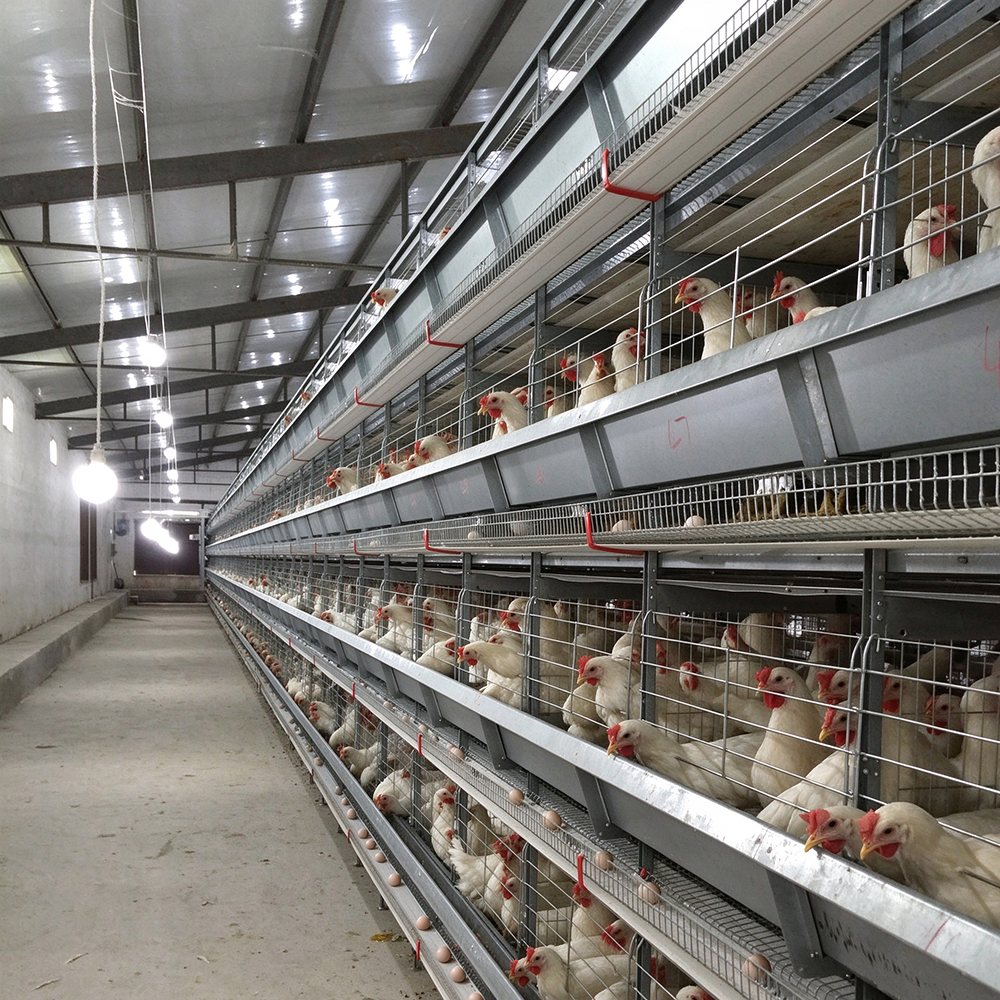
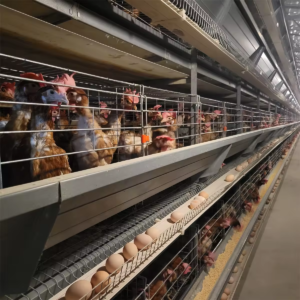
Our 4-Tier H-Type Layer Cage System offers an ultra-efficient, highly automated housing solution for modern commercial egg producers. By raising rearing density to over 62 birds per square meter, this system optimizes housing space while cutting land investment by approximately 70% compared to free-range farming. It creates an ideal environment for producing organic and eco-friendly green eggs.
The structural frame is manufactured from 275g/m² spangle-free hot-dip galvanized steel sheet, providing exceptional corrosion resistance. The cage wire grid utilizes 3.0mm high-tensile Q235 cold-drawn steel wire, which retains its elasticity even after 8 to 10 years of heavy use. Combined with advanced ventilation, lighting, and fully automated feeding, drinking, and belt manure removal systems, this system significantly lowers energy consumption, minimizes disease risks, improves feed conversion ratios (FCR), and delivers a extended service life of over 20 years.
Specifications Reference
| Specification / Item | 4-Tier H-Type Single Unit |
|---|---|
| Single Unit Dimensions (L x W x H) | 195 cm (L) x 60 cm (W) x 43 cm (H) |
| Cage Depth & Bottom Slope | Depth: 60 cm; Bottom mesh slope < 7° (Ensures smooth, damage-free egg rolling) |
| Rearing Density | > 62 birds / m² (Over 62 birds per square meter) |
| Grid Wire Material | Premium 3.0mm Q235 high-tensile cold-drawn steel wire |
| Frame Structural Material | 275g/m² spangle-free hot-dip galvanized steel sheet / Angle iron / U-steel profile |
| Anti-Corrosion Finish | Hot-dip Galvanized, Cold Galvanized, or Zinc-Aluminum alloy wire welding |
| Door Type Options | Horizontal sliding door or vertical lift-up door |
| Drinker Options | Spring-type, steel-ball, or drip-cup automatic nipple drinker |
| Water Pipes & Fittings | Premium 4-meter PVC water pipes, elbows, tees, straight connectors, water tank, and tank stand |
| Feed Trough & Accessories | Spangle-free hot-dip galvanized / Galvalume / PVC feed trough, including locks, joiners, and end caps |
| Service Lifespan | Cold Galvanized: 10–15 years; Full Hot-Dip Galvanized: 20+ years |
Technical Indicators
-
- Steel Hardness: Q235 cold-drawn high-tensile steel wire (3.0mm diameter) with permanent spring elasticity.
- Frame Galvanizing Standard: 275g/m² spangle-free hot-dip galvanized sheet metal, including trough connectors.
- Bottom Grid Slope: Less than 7 degrees for gentle, damage-free egg rolling.
- Land Footprint Saving: Reduces occupied land by approximately 70% compared to free-range setups.
- Manure Removal Efficiency: Belt-type system outputs dry, granular manure with high organic fertilizer reuse value.
Manufacturing Standards
-
- Premium Q235 Wire Material: Rejects inferior Q195 wire. Uses 3.0mm Q235 cold-drawn wire to guarantee long-term elasticity and non-sagging mesh performance.
- Smooth Burr-Free Surface: Precision welding ensures zero sharp cuts or roughness on grid wire, protecting bird feet from injuries and secondary Staphylococcus bacterial infections.
- Anti-Waste Door Geometry: Front mesh features vertical main wires spaced at 5cm with minimal horizontal wires. The push-pull door attaches to 2 to 3 vertical wires, restricting head-shaking during feeding to stop feed spilling.
- Precision 275g/m² Galvanized Frame: Cold-formed profiles with spangle-free hot-dip zinc coating protect joints and channels from moisture and high-ammonia chicken house atmospheres.
- Low-Slope Bottom Grid (<7°): Engineered shallow angle relieves hen foot stress, prevents layer fatigue syndrome, and ensures safe egg roll-out.
Product Advantages
-
- 20+ Years Extended Lifespan: Full hot-dip galvanizing treatment protects against severe corrosion, extending operational life to over 20 years.
- 70% Land Saving & High Density: Increases bird housing density to over 62 birds/m², significantly cutting land and building investment.
- Zero Feed Waste & Low Stress: Specialized door locks restrict head shaking while eating, promoting uniform feeding and lower stress.
- Foot Health & Zero Infection: Ultra-smooth wire prevents foot injury and stops Staphylococcus bacterial infections.
- Reduced Egg Breakage: <7° bottom angle ensures smooth egg collection, effectively eliminating hair cracks and lower layer fatigue.
- Eco-Friendly Belt Manure System: Manure is removed on belts, drying into granules for easy fertilizer reuse while minimizing disease and odors.
- Full Turnkey Automation: Seamlessly integrates with automatic feeding, drinking, ventilation, and lighting to save labor costs and improve FCR.
Daily Maintenance
-
- Check water pressure regulators and test nipple drinkers (spring, steel ball, or drip cup) weekly for smooth water flow.
- Clean PVC feed troughs regularly to clear accumulated feed residual and keep troughs dry.
- Inspect the manure belt running alignment every week and clear droppings from driving rollers.
- After each flock rotation, pressure-wash the galvanized frame and cage mesh, then sanitize the entire facility.
- Regularly inspect door slide tracks to ensure smooth inward or push-pull operation.
OEM / ODM Customization Services
-
- Customizable Cage Dimensions: Adjust tier height (3-tier, 4-tier, 5-tier) and compartment dimensions to match your farm layout.
- Structural Frame Options: Choose between Angle Iron or Heavy-Duty U-Steel profiles for structural legs.
- Door Design Options: Customized horizontal sliding doors or vertical lift-up doors.
- Drinking System Options: Select spring-type, steel-ball, or drip-cup nipple drinkers.
- Custom Branding: OEM logo printing on PVC feed troughs, water tanks, and shipping packaging.
FAQ
Q1: What is the difference between Q235 wire and Q195 wire used by small factories?
A1: Q235 cold-drawn steel wire has significantly higher tensile strength and structural hardness. Inferior Q195 wire sags under heavy bird weight after 1–2 years, whereas Q235 wire maintains its original elasticity even after 8 to 10 years of continuous use.
Q2: How does this H-type cage system help produce “green/organic eggs”?
A2: The integrated manure belt system immediately separates manure from the chickens and dries it into granules. This prevents ammonia buildup, cuts disease transmission, and creates a clean, low-stress environment essential for organic egg production.
Q3: Why is a bottom grid slope of less than 7 degrees critical?
A3: If the angle is over 7°, eggs roll out too fast and collide with the trough edge, increasing breakage. If under 7°, eggs roll smoothly and safely into the collection trough without micro-cracks.
Reviews
There are no reviews yet.